

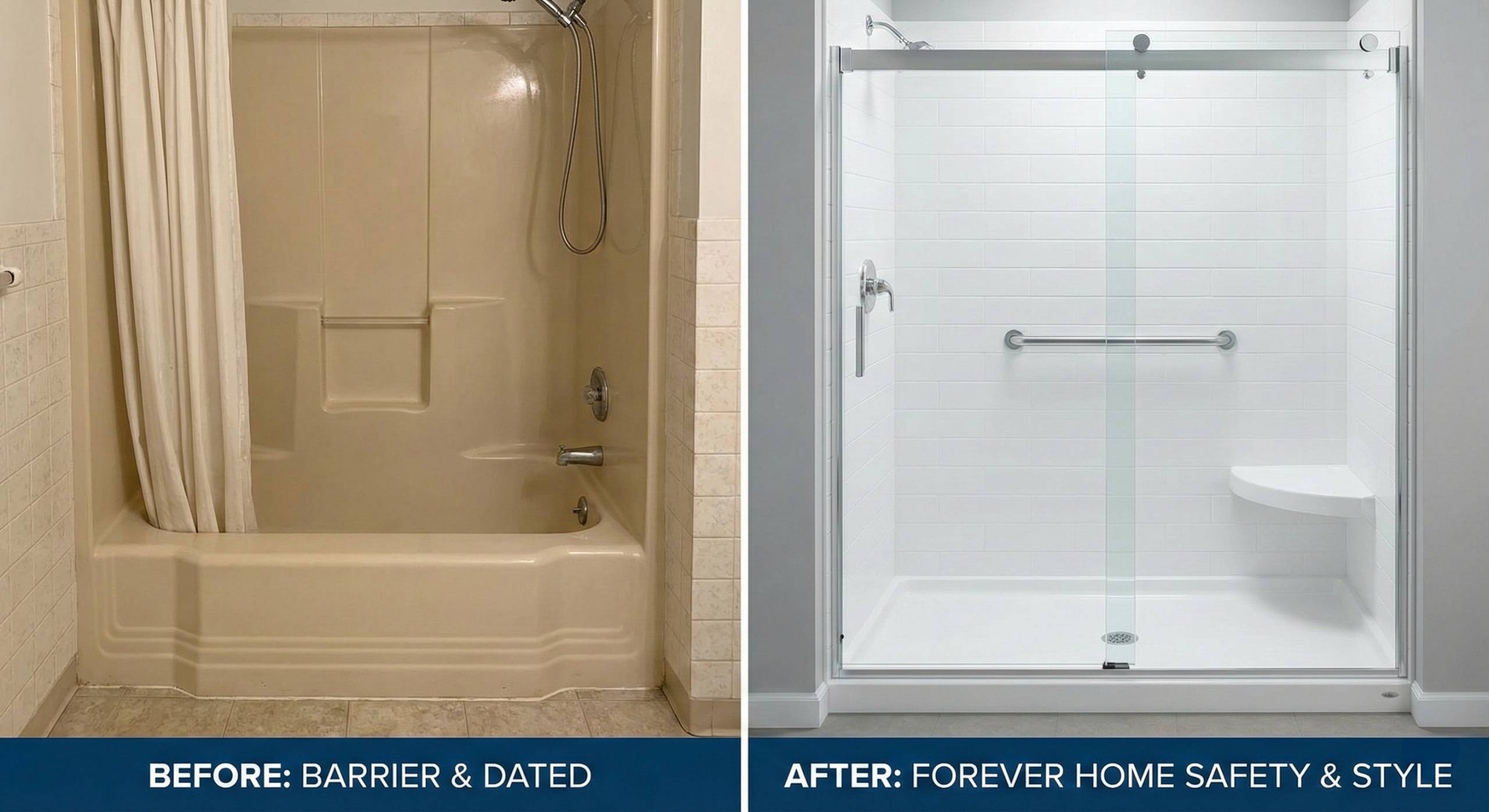
Gone are the days of moving every 5 to 7 years. With housing prices in London and the surrounding areas stabilizing at new highs, more homeowners are choosing to stay put, invest in their current properties, and renovate for the long haul. The goal is simple but profound: To create a space that is comfortable, luxurious, and safe for every stage of life.
However, for many, there is one massive, porcelain obstacle standing in the way of truly “aging in place”: The Standard Bathtub.
That 20-inch high wall isn’t just an inconvenience; it is often the single most dangerous architectural feature in a home. In this comprehensive guide, we explore why the Tub-to-Shower Conversion has become the #1 renovation for forward-thinking homeowners and how National Acrylics is helping families reclaim their independence and style.
1. The “Step-Over” Danger: Why the Tub Has to Go
Let’s be honest: unless you have small children, how often do you actually fill the tub for a bath? For most adults, the bathtub is simply a shower with a hurdle. And that hurdle is hazardous.
According to data from Public Health Canada, the bathroom is the leading location for falls among seniors. The specific mechanical act of balancing on one wet foot while lifting the other leg high to clear the tub wall is a gymnastic feat that becomes increasingly risky as we age. It puts unnecessary strain on the hips and knees.
By converting to a low-threshold shower, you eliminate that risk entirely. You are not just renovating a bathroom; you are “future-proofing” your home. This peace of mind is why so many adult children are gifting these renovations to their aging parents—it’s an investment in safety that looks like a luxury upgrade.
2. Modern Aesthetics: From Cluttered to “Open Concept”
Safety is the function, but style is the form. One of the biggest design complaints we hear from London homeowners is that their bathrooms feel “small,” “dark,” or “cramped.” A standard bathtub with a shower curtain acts as a visual wall, cutting the room in half and blocking light.
A Tub-to-Shower Conversion immediately opens up the space. By removing the bulky tub and replacing it with a sleek, low-profile acrylic base and clear glass doors, you extend the room’s sightlines. This “Open Concept” bathroom is a massive trend highlighted on Houzz for 2026.
Whether you choose our “Subway Tile” pattern for a classic look or a “Smooth White” finish for modern minimalism, the result is a bathroom that feels 30% larger, brighter, and more inviting. It transforms a utilitarian space into a personal sanctuary.
Key Points: The “Forever Home” Advantage
Why are Southwestern Ontario homeowners making the switch? Here is the snapshot:
- Safety First: Eliminates the dangerous “step-over” to significantly reduce fall risk.
- Visual Space: Replaces bulky tubs with sleek lines, making small bathrooms look huge.
- Hygiene: Acrylic is non-porous and easier to clean than old fiberglass tubs.
- Property Value: “Walk-in Showers” are a top search filter for buyers in the 2026 market.
- Speed: Our system can be installed in as little as 1-2 days without major demolition.
3. The Conversion Process: No Demolition Nightmare
A common fear is that removing a bathtub requires weeks of messy demolition, tearing up the floor, and moving plumbing. With traditional tile contractors, that fear is often a reality, involving dust, debris, and weeks of downtime.
At National Acrylics, we specialize in a streamlined retrofit process designed for occupied homes. Here is how it works:
- Removal: We remove your old steel or fibreglass tub and the surrounding walls down to the studs.
- Assessment: We inspect the plumbing and structural wood for any hidden rot or mould (a common issue in older London homes).
- Installation: We install a custom-fit acrylic shower base that matches the “footprint” of your old tub. This means we rarely have to move the drain, saving you thousands in plumbing costs.
- Finishing: We install the seamless acrylic wall system, ensuring a waterproof seal without grout.
For a detailed look at our installation timeline, visit our FAQ page.
4. Customization: Safety That Doesn’t Look “Clinical”
When people hear “accessible bathroom,” they often picture a hospital room with sterile stainless steel bars. We believe safety should be beautiful. The CMHC (Canada Mortgage and Housing Corporation) encourages “adaptable housing” that looks like a standard home but functions for all abilities.
Our line of accessories allows you to integrate safety features subtly:
- Designer Grab Bars: Available in matte black, chrome, or brushed nickel to match your faucets.
- Integrated Seating: Corner seats or fold-down benches that allow you to shower comfortably while seated—perfect for shaving legs or simply relaxing.
- Low-Threshold Bases: A 3-inch or 4-inch step is easy to navigate, even with mobility aids.
Organizations like CARP (Canadian Association of Retired Persons) consistently recommend these modifications to extend independent living by years.
5. The Financial Argument: Renovate vs. Relocate
The cost of moving in Ontario is astronomical. Between land transfer taxes, realtor fees, and moving costs, you could easily spend $30,000 to $50,000 just to switch houses. In contrast, a tub-to-shower conversion costs a fraction of that.
Furthermore, removing a tub does not hurt resale value, provided there is at least one bathtub elsewhere in the home (or if the home is targeted at downsizing couples). In fact, Realtor.ca trends suggest that a large, luxury walk-in shower in the Master Ensuite is now more desirable than a soaking tub for 80% of buyers. The market has shifted towards convenience and luxury showers over unused bathtubs.
👉 You can check out our “Anti-Scrub” Movement: Why Grout is Going Out in 2026 to see how these conversions have helped homeowners right here in your neighbourhood.
Additionally, for those interested in broader home design, Architectural Digest notes that removing bulky tubs is one of the fastest ways to modernize a mid-century home layout.
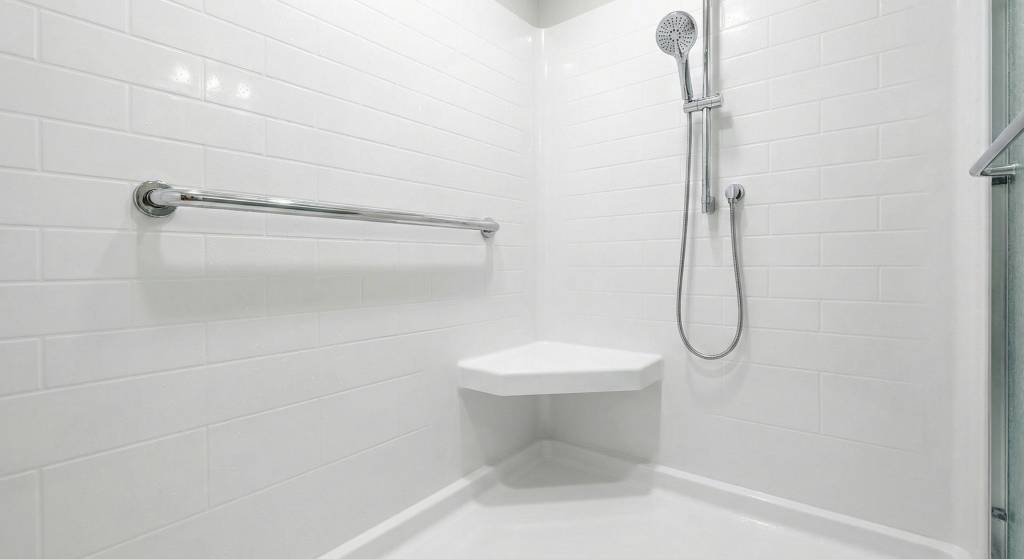
Safety doesn’t have to look clinical. Our designer grab bars and integrated seating blend seamlessly into your modern bathroom design.
Frequently Asked Questions About Conversions
Will the new shower fit in the same space as my old tub?
Yes. Standard bathtubs are usually 60 inches wide and 30 inches deep. We manufacture shower bases specifically designed to fit this exact “footprint,” so you don’t have to retile the floor or move walls.
Do you have to move the plumbing drain?
In most cases, no. We offer shower bases with left-, right-, or center-drains to match your existing plumbing configuration. This is one of the ways we keep costs down and timelines short.
Is a walk-in shower colder than a tub?
It is a common myth. While a shower is more open, our acrylic wall systems are natural insulators and feel warm to the touch (unlike cold ceramic tile). We also recommend installing a glass door rather than a curtain to retain steam and warmth.
How long does the installation take?
A typical tub-to-shower conversion takes 1 to 2 days. We arrive in the morning, remove the old unit, and begin the install. You can usually use your new shower 24 hours after we finish.
What is the warranty?
We take pride in the lasting quality of our work. Our premium acrylic systems are engineered to resist fading, yellowing, and cracking for years to come. See why homeowners choose us on our National Acrylics Advantages page.
Is your bathtub a barrier?
Don’t wait for a slip to happen. Upgrade your safety and your style in just one day. Contact National Acrylics today for a free in-home consultation and quote for your tub-to-shower conversion.

Leave A Comment